



The Denard currency during the Roman Republic period
Denarius is an ancient Roman silver coin that was first introduced around 211 BC. Widely used during the Roman Republic and Roman Empire, it became the main currency unit at that time. Octavianus, later known as Augustus, was the first emperor of the Roman Empire and ruled from 27 BC to 14 AD. On the Denard coins issued between 44 BC and 27 BC, his portrait and various symbols of Roman power and victory were usually engraved.
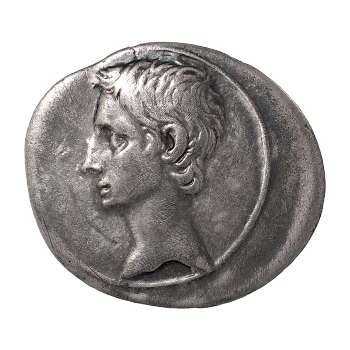
Roman currency Denar
Denarius is an ancient Roman silver coin that was first introduced around 211 BC. Widely used during the Roman Republic and Roman Empire, it became the main currency unit at that time. Octavianus, later known as Augustus, was the first emperor of the Roman Empire and ruled from 27 BC to 14 AD. On the Denard coins issued between 44 BC and 27 BC, his portrait and various symbols of Roman power and victory were usually engraved.

Trajanas Coin
This is an AS coin with Trajan printed on it, minted in Rome and used for Syria. On the front of this coin, there is a portrait of Trajan. His portrait is facing to the right, and when viewed from the back, there is light shining on the portrait and it is covered by a cloak. Next to the avatar is the inscription "IMP CAES NER TRAIANO OPTIMO AVG GER", which is Latin and means "Supreme Commander, Caesar, Nilva Trajan, the best emperor, conquered the Germanic people". Trajan, the second emperor of the Antonic dynasty in ancient Rome, was one of the Five Wise Emperors of Rome and reigned from 98 to 117.

The Stone Coffin of the Muse Goddess
The sarcophagus of the Muse is a work from the Roman period, currently housed in the Museu de Arqueologia archaeological museum in Lisbon. This work is a relic from the Roman period, dating back to the 3rd and 4th centuries AD. This sarcophagus was discovered in 1698, when it was located in the ruins of a vineyard near Ostia Road in Rome. It was once the collection of Cardinal Albani and was later brought to Paris during the Napoleonic Wars. This work has had a profound impact on many painters and poets.

Greek King Heraeus Drachma Silver Coin
The drachma silver coin of King Heraeus of ancient Greece, a half crown bust of King Heraeus from around 40 BC to AD 0, with the left hand holding a long scepter. Drachma is the most commonly used large denomination coin, typically made of silver. The weight of the coin is about 17 grams and the diameter is about 24 millimeters.

Third century Roman Empire helmet "Inlaid Golden Cavalry Helmet Nidbieber Style"
The type of cavalry helmet is the Niederbieber style, with hinged X-bars and long neck guards. Fold the edge of the neck protector (upwards) to create a clear edge impression. The helmet is currently housed in the Nijmegen Museum in the Netherlands.

The marble statue of Venus de Milos from the ancient Roman Empire period
The Venus de Milos, also known as the Broken Arm Venus, was discovered on Milos Island in 1820 and immediately caused a sensation throughout Europe. It was contested by several countries, and the arms of the sculpture were unfortunately destroyed during the chaos. After many twists and turns, it was finally purchased by France as a birthday gift to King Louis XVIII of France, who then gave it to the Houston Museum of Fine Arts. From then on, Venus became a broken arm goddess. However, the lost arms instead interpret a flawed beauty.

Greek King Heraeus IV Drachma Silver Coin
The drachma silver coin of King Heraeus of ancient Greece, a half crown bust of King Heraeus from around 40 BC to AD 0, with the left hand holding a long scepter. Drachma is the most commonly used large denomination coin, typically made of silver. The weight of the coin is about 17 grams and the diameter is about 24 millimeters.

The circulating currency of the ancient Greek Macedonian period was the Macedonian Shield and Silver Coin
This silver coin was minted in the city of Amphipolis in Macedonia under Roman control. The diameter of this silver coin is 3.3 centimeters. Artemis is a hunting goddess in Greek mythology, whose image is embedded in a delicate Macedonian shield. On the reverse side is a stick, surrounded by a wreath, with a line of inscriptions indicating that this coin belongs to the first region of the Roman vassal state. This Macedonian shield silver coin is in the collection of the Minneapolis Museum of Art.
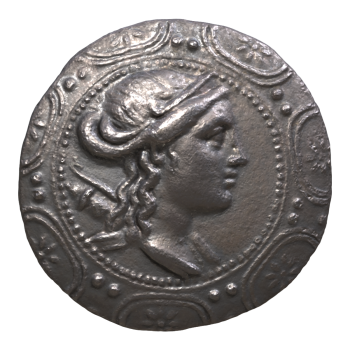
Ancient Greek Macedonian Period Currency Macedonian Shield Silver Coin (Four Drachmas)
It is a silver Macedonian shield with the head of Artemis (obverse) and a stick (reverse), minted around 158-150 BC. This silver coin was minted in the city of Amphipolis in Macedonia under Roman control. The silver coin has a diameter of 3.3cm. Artemis is a hunting goddess in Greek mythology, and her image is embedded in a delicate Macedonian shield. On the reverse side is a stick, surrounded by a wreath and surrounded by a line of inscriptions attributing this coin to the first area of the Roman vassal state. This Macedonian shield silver coin is in the collection of the Minneapolis Museum of Art.

Popular Models

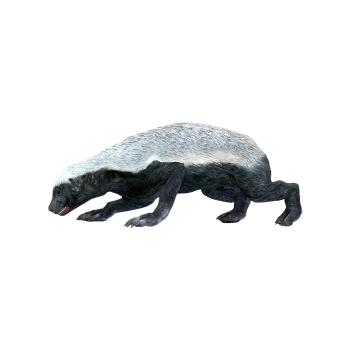
Honey Badger (3D animated model)
192 View
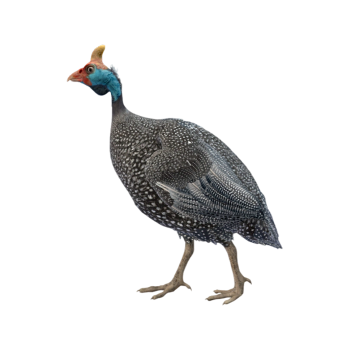
Guinea fowl (3D animated model)
163 View
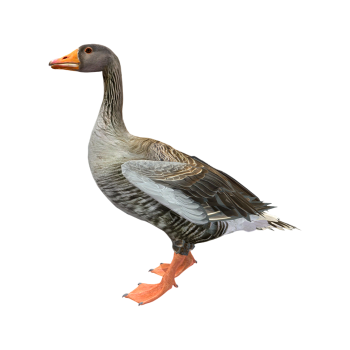
Wild Goose (3D animated model)
185 View

Red Fox (3D animated model)
153 View
Random Model
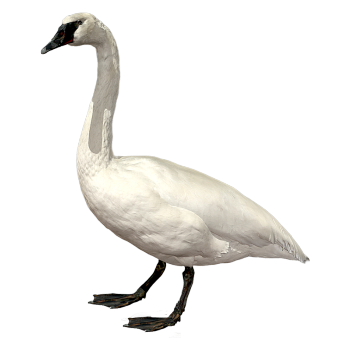
Black billed swan specimen
1064 View


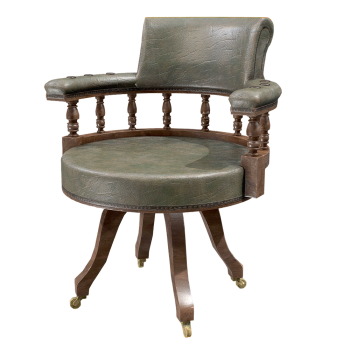
Classic Captain's Chair
455 View

Golden human skull model
517 View

Gore-Tex leather used work boots
1045 View

Italian cappuccino
848 View
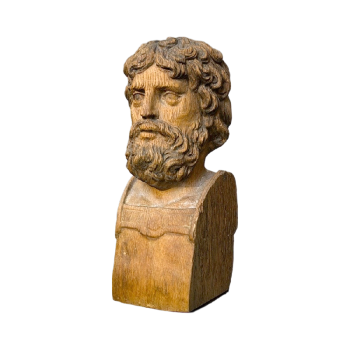
Wood Bust of St. Peter
566 View

General Francisco Sarwar Masso Cap
673 View